How to Keep Rabbits and Squirrels Out of Your Garden
This guide contains affiliate links. As an Amazon Associate, Simple Garden Hub earns from qualifying purchases, at no extra cost to you.
Few things are more discouraging than finding a row of seedlings eaten to the ground overnight. Rabbits and squirrels are the usual suspects in a backyard garden, and they need different defenses. The first job is working out which one you have.
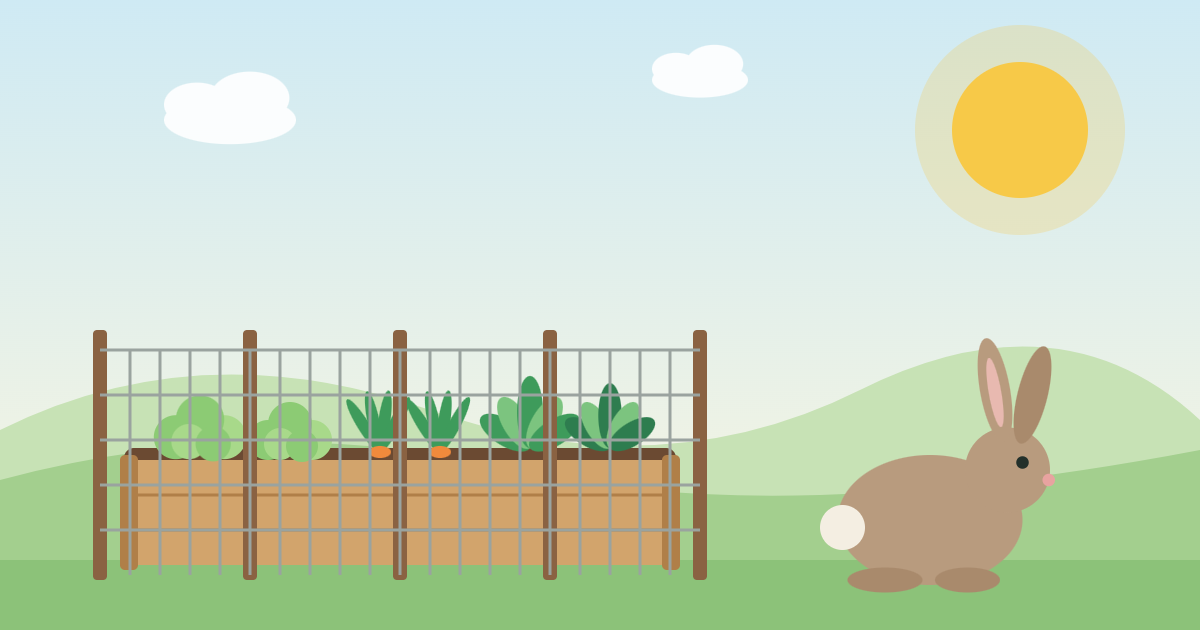
- Rabbits: a fence 2 feet high, made of 1-inch mesh or smaller, with the bottom buried 6 inches.
- Squirrels: cover beds with netting or a wire cage, since they climb any fence.
- Both: physical barriers work far better than sprays, scents or gadgets.
Who is eating your garden?
| Clue | Rabbits | Squirrels and chipmunks | Deer |
|---|---|---|---|
| The cut | Clean, angled, as if snipped | Gnawed; bites taken out of fruit | Ragged, torn edges |
| Height | Low, under about 2 feet | Any height | Up to 6 feet |
| Favorite targets | Lettuce, beans, peas, young seedlings | Tomatoes, corn, strawberries, bulbs, seeds | Almost anything |
| Other signs | Round, pea-sized droppings | Small holes dug in beds and pots | Hoof prints, larger droppings |
| When | Dusk and dawn | Daytime | Night, dusk and dawn |
If you are still unsure, sprinkle a little flour on the soil in the evening and look for tracks in the morning.
How to keep rabbits out
Rabbits are the easier problem, because they neither climb nor jump high. A simple fence stops them completely.
- Use the right mesh. Chicken wire or hardware cloth with openings of 1 inch or smaller. Young rabbits squeeze through anything larger.
- Make it 2 feet high. Go to 3 feet if you have jackrabbits or deep snow.
- Bury the bottom 6 inches, or bend the lowest 6 inches outward along the ground and pin it down. Rabbits will dig under a fence that simply rests on the soil.
- Support it with stakes every 4 to 6 feet, and check for gaps at corners and gates.
A 24-inch roll makes a rabbit-proof fence around one or two beds.
Other things that help against rabbits:
- Tall raised beds. Beds 24 inches high or more are out of easy reach. See raised bed gardening for beginners.
- Cloches over seedlings. A wire or mesh cover protects young plants during their most vulnerable weeks.
- Less cover. Rabbits shelter in brush piles, tall weeds and under decks. Clearing these near the garden makes it less inviting.
How to keep squirrels out
Squirrels climb, jump and dig, so a fence alone will not stop them. The answer is to cover what they want.
- Net or cage the bed. Drape bird netting over hoops, or build a simple frame covered in hardware cloth that lifts off for picking. Pin the edges down, as squirrels push under loose netting.
- Protect bulbs and seeds. Lay a piece of wire mesh flat over newly planted bulbs or seed rows, and remove it once shoots appear. Squirrels are drawn to freshly dug soil.
- Mulch after planting. A layer of mulch hides the disturbed soil that invites digging. See the best mulch for a vegetable garden.
- Pick tomatoes early. Harvest when the fruit first shows color and ripen it indoors. Squirrels often take a single bite from each ripe tomato.
- Offer water. In dry weather, squirrels bite into tomatoes partly for the moisture. Many gardeners find a shallow dish of water away from the beds reduces the damage.
- Cover pots. A layer of river stones or a circle of mesh on the soil surface stops digging in containers.
A hooped tunnel keeps squirrels and birds off a whole bed, and lifts off for harvesting.
Do repellents work?
Sometimes, briefly. Treat them as a second layer, never as the main defense.
| Method | Verdict | Notes |
|---|---|---|
| Hot pepper (capsaicin) sprays | Some effect | Must be reapplied after rain and on new growth. Wash produce before eating |
| Scent repellents (egg or blood-meal based) | Some effect on rabbits | Smelly, and they wear off. Rotate products so animals do not get used to one |
| Motion-activated sprinklers | Often effective | Startles animals with a burst of water. Move it now and then |
| Ultrasonic devices | Unreliable | Little evidence they work for long |
| Human hair, soap, shiny objects | Unreliable | Animals quickly learn to ignore them |
| Mothballs | Do not use | They are a pesticide, toxic to children, pets and soil, and using them outdoors this way is not permitted |
A harmless burst of water that works on rabbits, squirrels, cats and deer alike.
A useful extra layer around a fence. Reapply after every rain.
Plants they tend to leave alone
Hungry animals will eat almost anything, so no plant is truly safe. These are usually low on the menu:
- Less attractive to rabbits: onions, garlic, leeks, tomatoes, peppers, potatoes, squash, and strongly scented herbs such as rosemary, sage, mint and oregano.
- Rabbit favorites to protect first: lettuce, spinach, beans, peas, broccoli, carrot tops and all young seedlings.
Planting onions or herbs around the edge of a bed may help a little, but do not rely on it. Garlic is one crop almost nothing bothers.
What not to do
- Do not trap and relocate. It is illegal in many places, relocated animals often die, and new ones move into the empty territory.
- Do not use poison. It endangers pets, children, and the hawks, owls and foxes that naturally keep rabbit and squirrel numbers down.
- Do not leave food out. Fallen birdseed, pet food and open compost attract squirrels. A closed compost bin helps. See how to compost at home.
Frequently asked questions
Will rabbits jump into a raised bed?
They can hop into beds lower than about 18 inches. Taller beds, or a low mesh fence around the rim, keep them out.
How do I stop squirrels digging in my pots?
Cover the soil with stones, pine cones or a circle of wire mesh cut to fit around the plant. See container gardening for beginners.
Does coffee, cayenne or cinnamon keep animals away?
Briefly, at best. They wash away with the first watering and need constant reapplying. A barrier is less work in the long run.
Do rabbits eat tomato plants?
Rarely the mature plants, which are mildly toxic to them, but they will nibble young seedlings. Protect new transplants for the first few weeks.