The Best Fertilizer for a Vegetable Garden: A Simple Guide
This guide contains affiliate links. As an Amazon Associate, Simple Garden Hub earns from qualifying purchases, at no extra cost to you.
The fertilizer aisle is confusing by design: dozens of bags, each with three numbers and a promise. In practice, a home vegetable garden needs very little. Compost does most of the work, and one all-purpose fertilizer covers the rest. This guide explains what to buy, when to use it, and when to leave it on the shelf.
- Start with compost: 1 to 2 inches on every bed, every year.
- For most gardens, a balanced, slow-release organic fertilizer such as 4-4-4 or 5-5-5 is all you need.
- Feed at planting, then again midseason for hungry crops such as tomatoes, squash and corn.
- More is not better. Too much fertilizer harms plants and washes into waterways.
What the three numbers mean
Every fertilizer label shows three numbers, such as 5-5-5 or 10-10-10. They are the percentages, by weight, of the three nutrients plants use most: nitrogen (N), phosphorus (P) and potassium (K), always in that order.
A “balanced” fertilizer has roughly equal numbers. Higher numbers mean a more concentrated product, not a better one. A 10-10-10 simply needs to be applied at half the rate of a 5-5-5.
Do you need fertilizer at all?
Not always. Soil that gets compost every year often grows good vegetables with little or nothing added. Fertilizer earns its place when:
- the bed is new, or filled with bagged soil that is low in nutrients;
- you are growing in pots, where watering washes nutrients away;
- you grow heavy feeders such as tomatoes, corn and squash;
- plants are pale and slow despite good light and water.
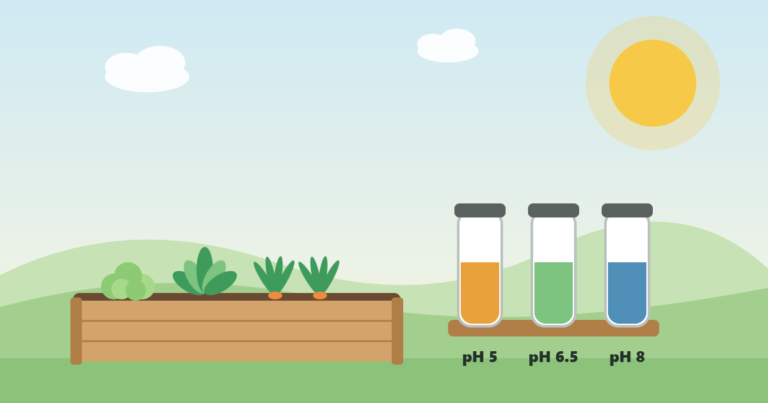
A soil test takes out the guesswork. It also tells you your soil’s pH, which controls whether plants can use the nutrients already there. See how to test your soil pH.
Organic or synthetic?
| Organic | Synthetic | |
|---|---|---|
| Made from | Plant, animal and mineral sources: meals, manures, kelp, rock dusts | Manufactured mineral salts |
| Speed | Slow. Soil life breaks it down over weeks | Fast. Available to plants almost at once |
| Risk of burning plants | Low | Higher if overapplied |
| Effect on soil | Feeds soil organisms as well as plants | Feeds the plant only |
| Typical strength | Lower numbers, such as 4-4-4 | Higher numbers, such as 10-10-10 |
| Cost per pound of nutrient | Higher | Lower |
Plants take up the same nutrients from either. For beginners, slow-release organic fertilizers are more forgiving, because it is hard to overdo them. Synthetic fertilizers are useful when a plant needs help quickly.
The main types of fertilizer
Granular, all-purpose
Dry pellets or powder mixed into the soil. Feeds for weeks or months. One bag suits most of the garden.
Liquid feeds
Fish emulsion, seaweed or a soluble powder diluted in a watering can. Fast-acting; ideal for pots and seedlings.
Tomato fertilizer
Lower in nitrogen and higher in potassium. Good for tomatoes, peppers and squash once they flower.
Compost
Low in nutrients by the numbers, but it improves soil structure and feeds slowly all season.
A balanced, slow-release granular feed. If you buy only one fertilizer, make it this kind.
Dilute in a watering can for seedlings, pots and plants that need a quick lift.
Use from first flowers onward on tomatoes, peppers and other fruiting crops.
Which vegetables need the most feeding?
| Heavy feeders | Moderate feeders | Light feeders |
|---|---|---|
| Tomatoes, peppers, eggplant | Lettuce, spinach, chard | Beans and peas |
| Corn | Carrots, beets | Radishes |
| Squash, cucumbers, melons | Onions, garlic | Most herbs |
| Cabbage, broccoli, kale | Potatoes |
Beans and peas host bacteria on their roots that capture nitrogen from the air, so they need little. Herbs such as rosemary, thyme and oregano have the best flavor in lean soil.
When and how to fertilize
- Before planting: spread compost, then scatter granular fertilizer at the rate on the label and mix it into the top few inches of soil.
- At planting: for transplants, a small handful of granular fertilizer mixed into the planting hole is enough.
- Midseason, for heavy feeders: “side-dress” by sprinkling fertilizer on the soil a few inches from the stem and watering it in. Good moments are when tomatoes and peppers set their first fruit, when corn is knee-high, and when squash vines begin to run.
- Containers: feed with a liquid fertilizer every 2 to 4 weeks. See container gardening for beginners.
Always water after applying granular fertilizer, and never fertilize bone-dry soil. Dry roots are easily damaged by concentrated nutrients.
Common fertilizer mistakes
- Using too much. Excess fertilizer scorches roots and leaf edges, and the surplus washes into streams and groundwater. Follow the label.
- Too much nitrogen on fruiting crops. You get huge, dark green plants and very few tomatoes or peppers.
- Fresh manure. It can burn plants and may carry harmful bacteria. Use manure that has been composted or aged. If you do apply fresh manure, do it in fall, several months before harvest.
- Feeding a struggling plant without checking the cause. Yellow leaves are more often due to watering than hunger. See why tomato leaves turn yellow.
- Fertilizing late in the season. Feeding in fall pushes soft growth that frost will kill.
Store fertilizer safely. Keep it dry, in its original bag, and out of reach of children and pets. Some organic fertilizers, such as bone and blood meal, smell attractive to dogs and can make them ill if eaten.
Frequently asked questions
What is the best all-purpose fertilizer for vegetables?
A balanced, slow-release granular fertilizer, with numbers such as 4-4-4 or 5-5-5, suits nearly every crop.
Is compost a fertilizer?
Not strictly. It is low in nutrients but improves the soil and releases them slowly. Use it every year, and add fertilizer only where plants need more. See how to compost at home.
How often should I fertilize my vegetable garden?
For most crops, once at planting. Heavy feeders benefit from one or two more feeds during the season. Pots need feeding every 2 to 4 weeks.
Are coffee grounds a good fertilizer?
They add a little nitrogen and organic matter, and are best mixed into the compost pile. A thick layer on the soil can form a crust that sheds water.