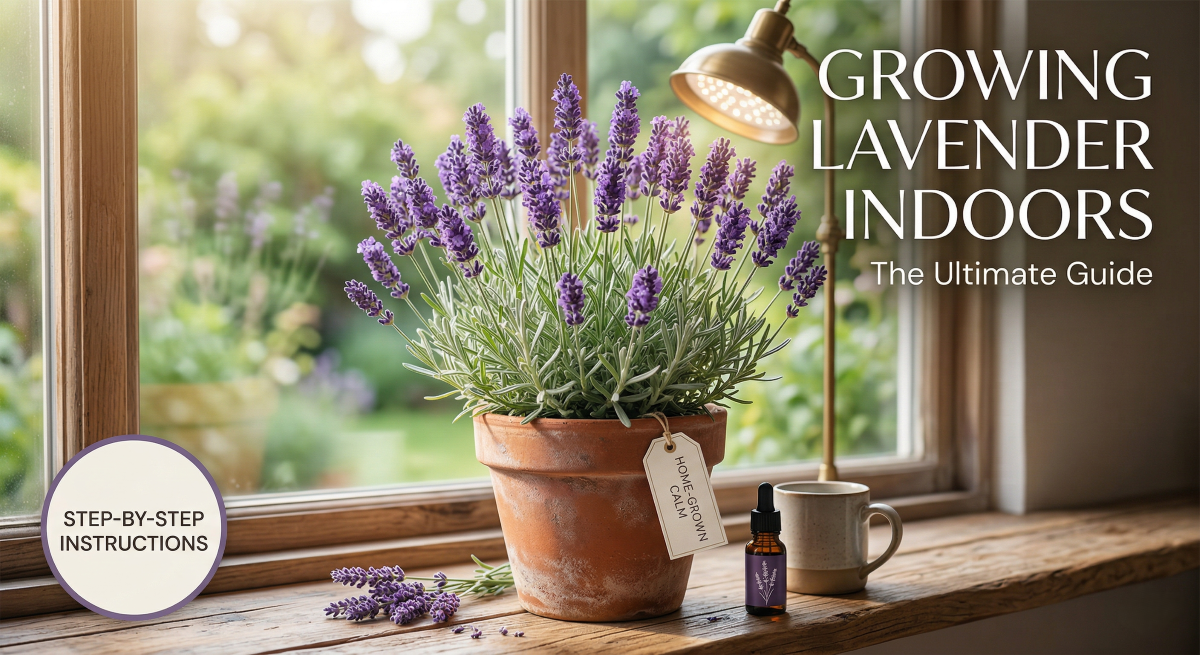
How to Grow Lavender Indoors: The Ultimate Guide to Year-Round Fragrance
Growing lavender indoors is a rewarding challenge that brings a touch of the Mediterranean—and its calming scent—directly into your living space. While lavender is traditionally an outdoor shrub, with the right light and care, you can successfully cultivate this “herb of relaxation” on your windowsill.
1. Choosing the Right Variety
Not all lavender is created equal when it comes to indoor life. For the best results, stick to smaller, more compact varieties:
- French Lavender (Lavandula dentata): More tolerant of indoor conditions and has a long blooming season.
- English Lavender (Lavandula angustifolia): Varieties like ‘Munstead’ or ‘Hidcote’ stay small and offer that classic sweet scent.
- Spanish Lavender (Lavandula stoechas): Recognizable by its “rabbit ear” bracts; it loves the heat but can be finicky about humidity.
2. Step-by-Step Planting Instructions
Step 1: Select the Container
Choose a pot that is only 1–2 inches larger than the root ball. Lavender likes to be a bit “tight.” Ensure the pot has ample drainage holes—terracotta is ideal as it helps wick away excess moisture.
Step 2: Prepare the Soil
Lavender requires lean, alkaline, and well-draining soil. Standard potting mix holds too much water. Use one of these options:
- The Pro Mix: 70% high-quality potting soil mixed with 30% perlite or horticultural sand.
- The Quick Fix: A pre-mixed cactus or succulent potting soil.
- The Sweetener: Add a tablespoon of lime (calcium carbonate) to the soil to increase alkalinity.
Step 3: Planting
Place a small layer of gravel at the bottom of the pot to prevent the drainage holes from clogging. Position your lavender so the crown (where the stems meet the roots) is just above the soil line. Packing it too deep can lead to rot.
3. Essential Care Guide
Lighting (The Most Important Step)
Lavender needs 6–8 hours of direct sunlight daily. A south-facing window is your best bet. If you don’t have enough natural light, you must use a full-spectrum LED grow light positioned 6–12 inches above the plant for 12 hours a day.
Watering Schedule
Overwatering is the #1 killer of indoor lavender.
- The Rule: Allow the top 1–2 inches of soil to dry out completely before watering.
- The Method: Water deeply at the base of the plant until it runs out of the drainage holes. Never mist the foliage, as lavender hates high humidity.
Fertilizer
Lavender is a “light feeder.”
- Option A: Use a balanced, water-soluble fertilizer diluted to half-strength once every four weeks during the spring and summer.
- Option B: Apply a small amount of slow-release organic fertilizer at the start of the growing season.
- Winter: Do not fertilize during the dormant winter months.
Pros and Cons of Growing Lavender Indoors
| Pros | Cons |
| Natural Aromatherapy: Improves mood and sleep. | Light Hungry: Very difficult to grow without bright sun or grow lights. |
| Year-Round Access: Fresh sprigs for tea or crafts. | Air Flow: Requires good circulation; prone to root rot in stagnant air. |
| Pest Repellent: Naturally deters flies and mosquitoes. | Short Lifespan: Indoor plants rarely live as long as their outdoor counterparts. |
Frequently Asked Questions
Why is my indoor lavender turning brown?
Usually, this is a sign of overwatering or poor drainage. Check the roots for “root rot” (they will be mushy and black). Ensure the plant isn’t sitting in a saucer of water.
Does lavender need a humid environment?
No. Lavender is native to the Mediterranean; it prefers dry air. Avoid placing it in bathrooms or near humidifiers.
How often should I prune?
Prune lightly after the first flush of flowers to encourage bushier growth. Never cut back into the “woody” part of the stem, as it may not regrow.
Conclusion
Growing lavender indoors is entirely possible if you prioritize sunlight and drainage. By mimicking its natural dry, sunny habitat, you can enjoy the silver foliage and calming scent of lavender every day. Start small with a French variety, keep your watering can in check, and watch your indoor garden thrive!