Raised Bed Gardening for Beginners: Build, Fill and Plant Your First Bed
This guide contains affiliate links. As an Amazon Associate, Simple Garden Hub earns from qualifying purchases, at no extra cost to you.
A raised bed is the easiest way to start a vegetable garden. You skip the digging, you control the soil, and you get fewer weeds. This guide walks you through every decision in order: size, location, materials, soil, and planting.
- Size: 4 feet wide, up to 8 feet long, 10 to 12 inches deep.
- Location: a level spot with 6 to 8 hours of direct sun, close to a hose.
- Soil: roughly 60% topsoil, 30% compost, 10% potting mix.
- How much: a 4 x 8 foot bed that is 12 inches deep holds 32 cubic feet (about 1.2 cubic yards).
Why start with a raised bed?
Most new gardeners struggle with the ground they already have: heavy clay, sand, rocks, or lawn full of weed seeds. A raised bed lets you start with good soil on day one. It also brings a few other benefits:
- Better drainage. Soil above ground level sheds extra water, so roots are less likely to rot.
- Warmer soil in spring. Raised soil warms up sooner, so you can plant a little earlier.
- Fewer weeds and less bending. Fresh soil has few weed seeds, and the bed edge gives you somewhere to lean.
- No soil compaction. You never step in the bed, so the soil stays loose and roots spread easily.
The trade-offs are cost (lumber and soil are not free) and watering: raised beds dry out faster than ground-level gardens in hot weather.
What size should a raised bed be?
The most important measurement is the width. Keep the bed no wider than 4 feet so you can reach the middle from either side without stepping in. If the bed sits against a fence or wall and you can only reach from one side, keep it 2 to 2.5 feet wide.
Length is up to you. Eight feet is popular because lumber is sold in 8-foot boards, which means fewer cuts. For depth, 10 to 12 inches suits almost every vegetable. Lettuce and herbs manage in 6 inches, while carrots and tomatoes appreciate the full 12.
Planning more than one bed? Leave paths at least 2 feet wide between them, or 3 feet if you want to fit a wheelbarrow.
Where to put your raised bed
- Follow the sun. Tomatoes, peppers, squash and most other vegetables need 6 to 8 hours of direct sun. Watch your yard for a day and note which spots stay sunny from mid-morning to late afternoon.
- Stay close to water. You will water often in summer. If the hose does not reach comfortably, the garden gets neglected.
- Pick level ground. On a slope, water runs to one end. Level the spot first, or dig the high side in slightly.
- Avoid tree roots and low spots. Trees steal water and cast shade. Low areas that puddle after rain stay soggy.
What to build it from
| Material | Pros | Cons |
|---|---|---|
| Cedar or redwood | Naturally rot-resistant; often lasts 10 years or more | The most expensive wood option |
| Untreated pine or fir | Cheap and easy to find | Rots sooner, often within 3 to 7 years |
| Galvanized steel kit | Long-lasting, quick to assemble, no tools beyond a wrench | Edges are less comfortable to lean on; fixed sizes |
| Concrete blocks | Very durable, no cutting | Heavy, and takes up more space |
Skip these: old railroad ties (treated with creosote) and salvaged lumber that was pressure-treated before 2004, which may contain arsenic. Lumber treated with today’s copper-based preservatives is widely considered acceptable for garden beds, but if you would rather avoid it, choose cedar or steel.
Bolts together in under an hour with no cutting. A good pick if you do not own a saw.
The classic wooden look, with boards that slot into corner posts.
How to set up the bed
- Mow or trim the area short. You do not need to dig up the lawn.
- Lay down plain cardboard. Overlap the edges and remove any tape. It smothers the grass, then breaks down within a season so roots can grow through.
- Add wire mesh if burrowing animals are a problem. Staple half-inch hardware cloth across the bottom of the frame to keep out gophers and voles.
- Set the frame in place and check that it is level.
- Fill it with soil (see below) and water it well. The soil will settle an inch or two, so top it up.
The best soil for raised beds
Do not fill a raised bed with soil dug from your yard alone (it packs down hard) or with bagged potting mix alone (it is expensive and dries out fast). A blend works best:
- 60% topsoil for body and minerals.
- 30% compost for nutrients and soil life.
- 10% potting mix (a soilless blend with peat or coco coir and perlite) to keep things light and well-drained.
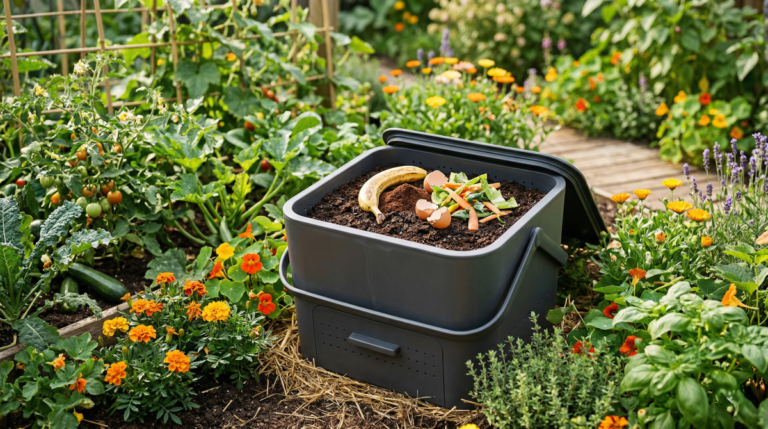
Many garden centers sell a ready-made “raised bed mix” or “garden blend” by the cubic yard, which is close to this recipe and far cheaper than bags when you need a lot. If you want to make your own compost for next year, see our guide to composting bins.
How much soil do you need?
Multiply length x width x depth, all in feet, to get cubic feet. Divide by 27 for cubic yards.
| Bed size | Depth | Cubic feet | Cubic yards | 1.5 cu ft bags |
|---|---|---|---|---|
| 4 x 4 ft | 12 in | 16 | 0.6 | 11 |
| 4 x 8 ft | 10 in | 27 | 1.0 | 18 |
| 4 x 8 ft | 12 in | 32 | 1.2 | 22 |
| 3 x 6 ft | 12 in | 18 | 0.7 | 12 |
What to plant in your first raised bed
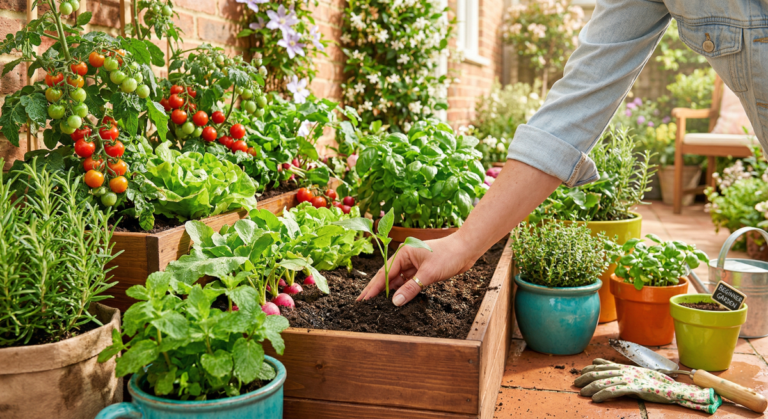
Start with crops that forgive mistakes. Here is a simple plan for one 4 x 8 foot bed in summer:
| Where | Plant | How many |
|---|---|---|
| North end (tallest plants, so they do not shade the rest) | Cherry tomatoes in cages | 2 |
| Middle | Bush beans | 2 short rows |
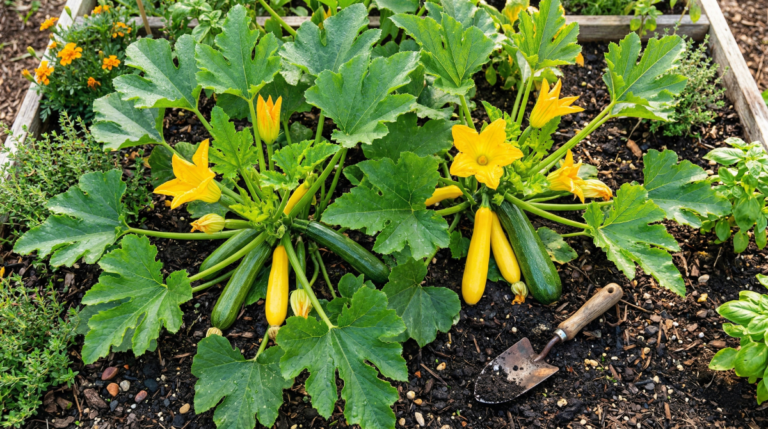
| Middle | Zucchini | 1 (it gets big) |
| South end | Leaf lettuce and radishes | 2 short rows each |
| Corners | Basil and marigolds | A few of each |
For more ideas, see the 10 easiest vegetables to grow and our companion planting chart, which shows what grows well side by side.
Caring for a raised bed
- Water deeply. Aim for about an inch of water a week, more in hot weather. Our guide on how often to water a vegetable garden explains how to check.
- Mulch. Spread 2 to 3 inches of straw or shredded leaves around plants to hold moisture and block weeds.
- Feed the soil every year. Soil settles and plants use up nutrients. Each spring, top the bed with 1 to 2 inches of fresh compost.
Snake it through the bed and it waters the soil directly, with no wet leaves and far less wasted water.
Common beginner mistakes
- Making the bed too wide. If you cannot reach the middle, you will end up stepping in it.
- Too little sun. A shady bed grows lettuce and herbs, but not tomatoes.
- Planting too close together. Small seedlings grow into big plants. Follow the spacing on the seed packet.
- Filling with cheap “fill dirt.” Fill dirt has almost no nutrients. The soil is where your money matters most.
Frequently asked questions
Do I need to put anything on the bottom of a raised bed?
Cardboard is enough for most yards. Add hardware cloth only if you have burrowing animals. Avoid plastic sheeting and landscape fabric, which can block drainage and stop roots and earthworms from moving through.
Can I put a raised bed on concrete or a patio?
Yes, but make it at least 12 inches deep, since roots cannot go any lower, and expect to water more often. Make sure water can drain out from under the frame.
When is the best time to build a raised bed?
Any time the ground is not frozen. Fall is ideal: the cardboard and soil settle over winter, and the bed is ready for planting in spring.