The Minimalist Gardener: Why You Only Need These 5 Tools to Grow Anything.
You’ve probably felt it – that slight overwhelm when you step into the gardening aisle at your local hardware store. Rows upon rows of spades, hoes, cultivators, edgers, aerators, specialized pruners, and countless other implements, each promising to revolutionize your gardening experience. It’s enough to make even a seasoned green thumb feel inadequate, let alone a beginner dreaming of their first tomato plant.
But what if I told you that most of it is entirely unnecessary? What if you could cultivate a thriving garden – from vibrant flowers to bountiful vegetables – with just a handful of fundamental items? Welcome to the world of minimalist gardening. You don’t need a shed full of shiny gadgets; you need a strategic approach and a few carefully chosen, multi-purpose tools.
This article cuts through the noise. We explore the philosophy of doing more with less in the garden, and then we reveal the five essential minimalist gardening tools that will empower you to grow practically anything. Get ready to simplify your gardening, save money, and connect more deeply with your plants.
The Philosophy of Minimalist Gardening
Minimalist gardening isn’t just about owning fewer items; it’s a deliberate approach that prioritizes intentionality, efficiency, and a deeper understanding of your plants and soil. You move away from clutter and consumption, focusing instead on the fundamental tasks that truly matter.
Why embrace this philosophy?
- Sustainability: Less consumption means fewer resources used in manufacturing and transport. It also often encourages you to invest in higher-quality, durable tools that last a lifetime, reducing waste.
- Cost-Effectiveness: You save significant money by avoiding impulse buys and specialized tools you rarely use.
- Less Clutter: A tidy, organized workspace (even a small one) reduces stress and makes gardening more enjoyable. You spend less time searching for tools and more time actively growing.
- Deeper Connection: With fewer distractions, you pay closer attention to your plants’ needs, the nuances of your soil, and the rhythm of nature. You rely more on observation and skill, and less on specialized equipment.
- Empowerment: You realize you possess the ability to grow food and beauty with simple means, fostering a sense of self-sufficiency.
Most gardening tasks boil down to a few core actions: digging, planting, weeding, watering, and pruning. When you boil it down to these essentials, the need for dozens of tools quickly evaporates.
Your Essential Toolkit: The 5 Tools You Truly Need
Forget the overwhelming array. These five items form the backbone of a successful, minimalist gardening setup. They are versatile, durable, and cover almost every task you encounter.
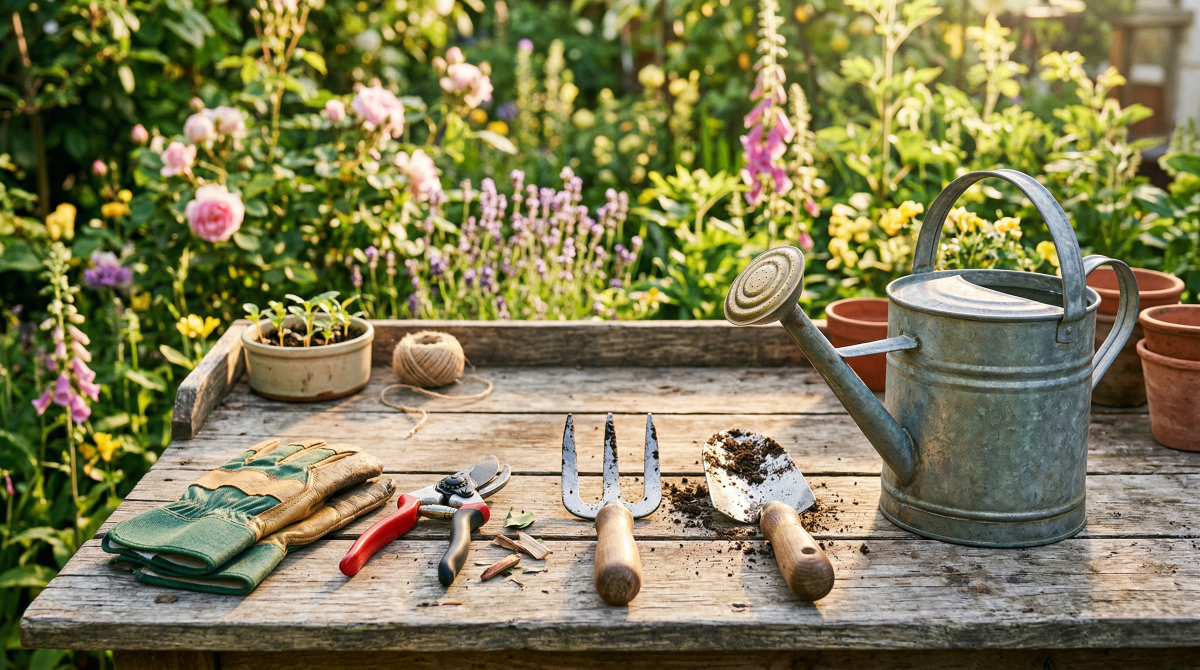
1. The Hand Trowel
This is arguably the most indispensable tool in any gardener’s arsenal, minimalist or not. A good hand trowel is like an extension of your hand.
- Purpose: You use a hand trowel for digging small holes for planting seedlings, transplanting smaller plants, scooping soil and amendments, and breaking up small clumps of dirt.
- Why it’s essential: Whether you plant herbs in a container, establish a new flower bed, or tuck in vegetable starts, the trowel handles the primary action of moving and shaping soil on a small scale. It’s perfect for precise work around delicate roots.
- Selection Tip: Choose one with a strong, rust-resistant blade (stainless steel is excellent) that extends well into the handle. An ergonomic grip will save your hands during extended use.
2. The Hand Fork (or Cultivator)
Often overlooked in favor of bigger tools, a sturdy hand fork is a revelation for soil health and weeding.
- Purpose: You use a hand fork to gently loosen and aerate compacted soil, especially in tight spaces or around existing plants. It excels at prying up stubborn weeds with deep taproots, ensuring you remove the entire root system. You can also mix in compost or fertilizer.
- Why it’s essential: Healthy soil is the foundation of any thriving garden. This tool helps you maintain good soil structure without disturbing delicate root systems too much. It also allows you to tackle weeds effectively and efficiently.
- Selection Tip: Look for strong, forged tines that won’t bend under pressure. A comfortable handle is crucial for effective leverage.
3. Pruning Shears (Secateurs)
When it comes to shaping, trimming, and harvesting, a sharp pair of pruning shears is non-negotiable.
- Purpose: You use pruning shears (often called secateurs) to deadhead spent flowers, trim back overgrown branches, harvest fruits and vegetables cleanly, and shape shrubs and small trees. They make clean cuts, which are vital for plant health.
- Why it’s essential: Proper pruning encourages healthier growth, better yields, and keeps your plants looking their best. You avoid tearing stems, which can introduce disease.
- Selection Tip: Invest in bypass pruners (blades overlap like scissors) for clean cuts on living wood. Look for comfortable handles, a secure locking mechanism, and blades you can sharpen. Keep them clean and sharp!
4. Gardening Gloves
While not a “tool” in the digging sense, a good pair of gardening gloves protects your most important assets: your hands.
- Purpose: Gloves protect your hands from thorns, splinters, dirt, blisters, insect bites, and the drying effects of soil. They provide a better grip on tools and plants.
- Why it’s essential: You use your hands for nearly every gardening task. Protecting them makes gardening more comfortable, safer, and allows you to work longer without discomfort.
- Selection Tip: Choose durable but flexible gloves. Look for materials that offer good puncture resistance for thorny plants but still allow dexterity. Different tasks might call for different materials (e.g., leather for heavy-duty, nitrile-coated for wet work), but a good all-around pair is key.
5. Watering Can
Delivering water effectively and efficiently is fundamental to plant survival. A watering can is a simple, effective solution.
- Purpose: You use a watering can to provide targeted hydration to individual plants, seedlings, and containers. Its spout and rose (sprinkler head) allow for gentle, even watering, preventing soil erosion or damage to delicate plants.
- Why it’s essential: All plants need water. A watering can gives you precise control over how much and where the water goes, minimizing waste and ensuring your plants get exactly what they need, without blasting them with a hose.
- Selection Tip: Consider the size and weight when full. A removable rose is handy for different watering needs. Metal cans are durable but heavier; plastic ones are lighter but may degrade over time.
Pros and Cons of Minimalist Gardening
| Pros | Cons |
|---|---|
| Cost-Effective: Save money on tools. | More Manual Effort: May require more physical labor than power tools. |
| Less Clutter: Organized, tidy workspace. | Slower for Large Areas: Not ideal for rapidly cultivating huge plots. |
| Eco-Friendly: Reduces consumption and waste. | Less Specialized: Won’t handle every niche task (e.g., felling large trees). |
| Easier Maintenance: Fewer tools to clean, store, and sharpen. | Initial Investment in Quality: Good tools cost more upfront but last. |
| Deeper Connection: Focus on plants, not gear. | Learning Curve: Requires skill development for various tasks. |
| Portable: Easy to carry your entire kit. | Limited Reach: Shorter handles mean more bending for some tasks. |
| Empowering: Self-sufficiency and skill development. | Specific Needs: May need minor adaptations for accessibility or very heavy tasks. |
Embracing Your Inner Minimalist Gardener
Beyond the tools, minimalist gardening is a mindset. It encourages you to observe your garden closely, understand your soil’s unique characteristics, and learn the life cycles of your plants. You’ll become more resourceful, finding creative solutions with what you have.
Start small. Maybe convert one corner of your yard or a patio into a dedicated growing space. As you gain experience, you’ll discover how powerful these few simple tools truly are. You’ll move beyond the desire for more gadgets and find immense satisfaction in nurturing life with just the essentials.
Frequently Asked Questions (FAQ)
Q1: Can I really grow anything with just these five tools?
A: You can grow a vast majority of common garden plants – vegetables, herbs, flowers, shrubs, and small fruit trees – with these tools. “Anything” refers to the principles of gardening, not literally every single exotic plant in every climate. For very large-scale farming or specialized tasks like tree removal, you’d obviously need more, but for a home garden, these are incredibly versatile.
Q2: What if I have a really big garden? Will these tools be enough?
A: For very large gardens (acres, for example), these tools might feel slow. However, the principles still apply. You might choose longer-handled versions of a trowel/fork for comfort, or a larger watering can, but the core functions remain. For initial ground breaking on a new, large bed, you might rent or borrow a spade or rototiller, but for ongoing maintenance, the minimalist kit shines.
Q3: How do I choose good quality minimalist gardening tools?
A: Focus on durability and comfort. Look for stainless steel or carbon steel blades, full-tang construction (where the metal extends through the handle), and ergonomic grips. Read reviews, and if possible, handle the tools in person to ensure they feel good in your hand.
Q4: What about specialized tasks like planting bulbs or weeding rows?
A: Your hand trowel digs perfect bulb-sized holes. Your hand fork effectively removes weeds in rows or individually. You might adapt your technique slightly, but these tools are surprisingly effective for a wide range of tasks once you practice.
Conclusion
The appeal of minimalist gardening extends far beyond merely saving space or money. It invites you to engage with your garden in a more conscious, intentional way. By stripping away the unnecessary, you uncover the true joy and simplicity of cultivation. You learn to trust your instincts, observe your plants more keenly, and appreciate the power of a few well-chosen implements.
You now possess the knowledge of the five core minimalist gardening tools. You understand their immense versatility and the philosophy that underpins this approach.
Final Thoughts
So, put down the intimidating catalog of gardening gadgets. Pick up a good trowel, a sturdy hand fork, sharp pruners, reliable gloves, and a simple watering can. Step outside, and start digging, planting, and growing. You’ll discover that with these humble essentials, you hold the power to bring life and beauty to your world, one simple, satisfying step at a time. Happy gardening!