How to Start Seeds Indoors: A Step-by-Step Guide for Beginners
This guide contains affiliate links. As an Amazon Associate, Simple Garden Hub earns from qualifying purchases, at no extra cost to you.
Starting seeds indoors gives you a head start on the season, far more varieties to choose from, and plants for a fraction of the garden-center price. It is not hard, but it does go wrong in predictable ways. This guide covers each step, in order, and the mistakes to avoid.
- When: most vegetables are started 6 to 8 weeks before your last spring frost.
- What in: clean containers with drainage holes, filled with seed-starting mix.
- Warmth: 65 to 75°F soil to sprout. A heat mat helps peppers and tomatoes.
- Light: 14 to 16 hours a day from a grow light kept just above the seedlings.
- Before planting out: harden seedlings off over 7 to 10 days.
Which seeds to start indoors (and which not to)
Not every vegetable benefits from an indoor start.
Slow, heat-loving crops
Tomatoes, peppers, eggplant, onions, broccoli, cabbage and most herbs need the extra weeks.
Fast growers
Cucumbers, squash and lettuce can be started inside for an early crop, or sown straight in the garden.
Root crops and big seeds
Carrots, radishes, beets, beans, peas and corn dislike having their roots disturbed. Sow them where they will grow.
When to start seeds indoors
Everything is counted backward from your average last spring frost date. Search for “last frost date” with your zip code, or ask at a local garden center. Then check the back of the seed packet, which tells you how many weeks ahead to sow.
Do not start too early. It is the most common beginner mistake. Seedlings kept indoors too long become tall, tangled and stressed. Later is better than earlier.
What you need
- Containers with drainage holes. Cell trays are easiest, but yogurt cups with holes punched in the bottom work too.
- A tray underneath to catch water, and a clear lid or plastic wrap to hold in moisture until seeds sprout.
- Seed-starting mix. It is finer and lighter than potting soil, so tiny roots can push through it. Do not use soil from the garden: it packs down and can carry disease.
- A light source. A sunny windowsill is rarely enough in late winter. See our simple guide to grow lights.
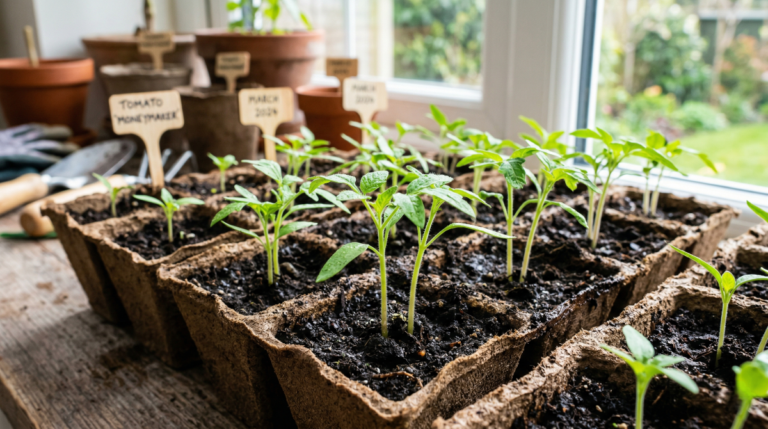
- Labels. Tomato and pepper seedlings look alike. You will not remember which is which.
Cell tray, drip tray and clear lid in one box, reusable for years.
A fine, light blend made for germination.
How to start seeds indoors, step by step
- Moisten the mix first. Tip it into a bucket, add water, and stir until it feels like a wrung-out sponge. Dry mix repels water once it is in the tray.
- Fill the containers to just below the rim and firm gently. Do not pack it down.
- Sow the seeds. Plant each one about twice as deep as the seed is wide. Tiny seeds such as lettuce and basil are pressed onto the surface and barely covered. Sow two seeds per cell as insurance.
- Label and cover. Write the variety and the date, then put on the clear lid.
- Keep them warm. Most seeds sprout fastest at 65 to 75°F. The top of a refrigerator works, or a seedling heat mat under the tray.
- Uncover at the first sprout. As soon as you see green, take the lid off and move the tray under light. Take it off the heat mat too.
Warms the soil from below. Peppers and tomatoes sprout noticeably faster on one.
Caring for seedlings
Light
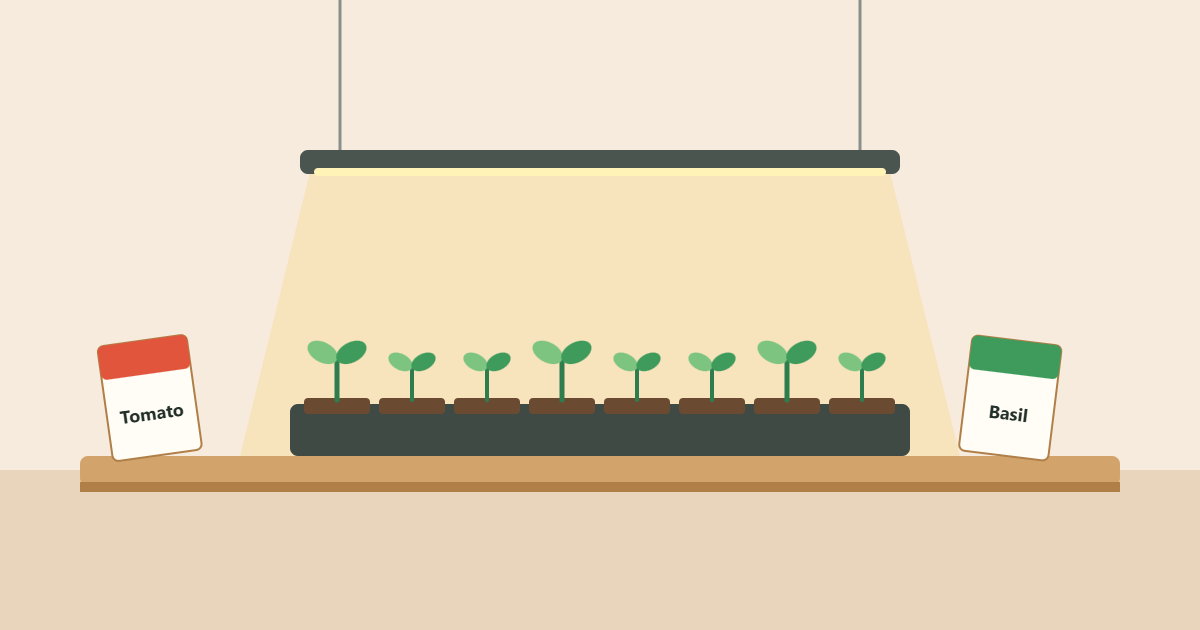
Give seedlings 14 to 16 hours of light a day. Hang shop-style LED or fluorescent tubes 2 to 4 inches above the leaves and raise them as the plants grow. Stronger LED panels sit farther away, so follow the maker’s guidance. A plug-in timer makes this automatic.
Water
Water from below: pour water into the tray, let the cells soak it up for 20 to 30 minutes, then tip out what is left. This keeps stems and leaves dry and encourages roots to grow downward. Let the surface dry slightly between waterings.
Thinning
When seedlings have their first “true” leaves (the second set, which look like the adult plant), keep the strongest one in each cell and snip the others at soil level with scissors. Do not pull them, as that disturbs the roots of the one you are keeping.
Feeding
Seed-starting mix contains little or no food. Once the true leaves appear, feed every week or two with liquid fertilizer mixed at half the strength on the label.
Potting up
If a seedling’s roots fill its cell before it is time to plant outside, move it to a larger pot. Tomatoes can be buried up to their lowest leaves, since the stem grows new roots.
Hardening off: do not skip this
Seedlings raised indoors have never felt wind, direct sun or cold nights. Put straight into the garden, they scorch and stall. Hardening off toughens them gradually over 7 to 10 days:
| Days | Where | How long |
|---|---|---|
| 1 to 2 | Outdoors in shade, out of the wind | 1 to 2 hours |
| 3 to 4 | Morning sun, afternoon shade | 3 to 4 hours |
| 5 to 6 | Sun for most of the day | 6 hours or more |
| 7 to 10 | Full sun, and out overnight if there is no frost | All day and night |
Then plant on a cloudy day or in the evening, and water well. Not sure where they are going? See raised bed gardening for beginners.
Common problems and fixes
| What you see | Cause | Fix |
|---|---|---|
| Tall, thin, leaning seedlings | Not enough light | Lower the light or add a stronger one; run it 14 to 16 hours |
| Stems pinched and collapsing at soil level | Damping off, a fungal disease of wet, still conditions | Cannot be cured. Start again with clean pots and fresh mix, water less, and run a small fan |
| White fuzz on the soil | Harmless mold from too much moisture | Remove the lid, water less, improve airflow |
| Nothing sprouts | Soil too cold, too dry, or old seed | Add warmth, keep evenly moist, check the date on the packet |
| Pale or yellow leaves | Hungry or overwatered | Begin half-strength feeding; let the mix dry a little |
Frequently asked questions
Can I start seeds on a windowsill without a grow light?
Only in a very bright south-facing window, and even then seedlings tend to stretch and lean. Turn the tray daily. A basic grow light gives much sturdier plants.
How long do seeds take to sprout?
Most vegetables appear in 5 to 10 days in warm soil. Peppers, eggplant and parsley can take two to three weeks.
Can I reuse seed trays?
Yes. Wash them in hot, soapy water first to remove any lingering disease.