From Waste to Wonder: How a Composting Bin Changes Everything
Every day, our bins overflow with food scraps, garden trimmings, and other organic matter destined for the landfill. This mountain of waste creates environmental challenges, from greenhouse gas emissions to overflowing dumps. But what if we told you a simple, accessible solution exists right in your backyard or even on your patio? A composting bin isn’t just a container; it’s a powerful tool that transforms what you once considered trash into a treasure, fundamentally changing your relationship with waste, your garden, and the planet.
This guide explores the immense composting bin benefits, delves into the practicalities, and shows you how this humble device becomes a cornerstone of sustainable living.
The Alchemy of Decomposition: What Happens Inside Your Composting Bin?
At its heart, a composting bin facilitates nature’s most efficient recycling program. You feed it a balanced “diet” of “greens” (nitrogen-rich materials like food scraps, grass clippings) and “browns” (carbon-rich materials like dry leaves, wood chips, shredded paper). Inside, a bustling ecosystem of microorganisms – bacteria, fungi, worms, and other tiny creatures – gets to work. They diligently break down these organic materials, generating heat and slowly transforming them into a dark, crumbly, nutrient-rich substance known as compost, or “black gold.”
This process mimics natural decomposition on a larger scale, turning what might otherwise be a smelly, pest-attracting mess into a valuable resource. It’s a low-tech, high-impact solution that empowers you to close the loop on your organic waste.
The Profound Benefits of Your Composting Bin
Embracing a composting bin brings a cascade of advantages, impacting your environment, your garden, your wallet, and even your mindset.
1. Environmental Superhero
- Drastically Reduces Landfill Waste: Organic waste comprises a significant portion of what ends up in landfills. By composting, you divert tons of material, extending the life of landfills and reducing the need for new ones.
- Lowers Methane Emissions: When organic matter rots in oxygen-deprived landfills, it produces methane, a potent greenhouse gas far more harmful than carbon dioxide. Composting, an aerobic process (with oxygen), prevents this harmful methane production.
- Conserves Resources: Creating synthetic fertilizers is energy-intensive. By making your own nutrient-rich compost, you reduce the demand for these industrially produced alternatives and the energy required to transport them.
2. Your Garden’s Best Friend
- Enriches Soil Structure: Compost improves soil aggregation, creating a loose, crumbly texture that roots love. This enhances drainage in clay soils and boosts water retention in sandy soils.
- Provides Natural Nutrients: Forget chemical fertilizers! Compost slowly releases essential nutrients – nitrogen, phosphorus, potassium, and micronutrients – directly to your plants, promoting robust growth and vibrant blooms.
- Boosts Plant Health and Resilience: Healthy soil full of beneficial microbes helps plants resist diseases and pests, reducing your reliance on chemical pesticides. Stronger plants naturally tolerate environmental stresses better.
- Supports Beneficial Soil Life: Compost introduces and feeds a diverse community of earthworms, beneficial bacteria, and fungi, all vital for a thriving soil ecosystem.
3. Economic Advantage
- Saves Money on Soil Amendments and Fertilizers: You no longer need to purchase bags of topsoil, potting mix, or chemical fertilizers. Your compost bin provides these for free!
- Potentially Reduces Waste Collection Fees: Some municipalities charge based on waste volume. Composting significantly shrinks your trash output, potentially leading to lower bills.
4. Educational & Personal Growth
- Connects You with Nature’s Cycles: Composting offers a fascinating, hands-on lesson in natural decomposition and the intricate web of life, fostering a deeper appreciation for ecological processes.
- Cultivates a Sense of Accomplishment: Watching your scraps transform into “black gold” is incredibly satisfying. You actively participate in creating something valuable from what others discard.
- Empowers Sustainable Living: Composting is a tangible step towards a more sustainable lifestyle, reducing your environmental footprint and inspiring others to do the same.
Pros and Cons of Composting Bins
Like any endeavor, composting has its advantages and a few considerations.
| Pros | Cons |
|---|---|
| Transforms waste into valuable soil amendment | Requires initial setup time and effort |
| Significantly reduces landfill waste | Needs consistent monitoring and turning (for some bins) |
| Lowers methane emissions | Can attract pests if not managed correctly |
| Enriches garden soil naturally | Potential for odor if not balanced |
| Saves money on fertilizers and soil | Requires some space (especially for outdoor bins) |
| Connects you to natural cycles | Not all organic waste is suitable for composting |
| Improves plant health and yields | Can take time for compost to break down |
Getting Started: Your Composting Journey
Starting your composting adventure is easier than you think.
- Choose Your Bin:
- Outdoor Bins: Tumblers (easy to turn), static bins (simple, less active management), worm farms (vermicomposting, great for small spaces/apartments).
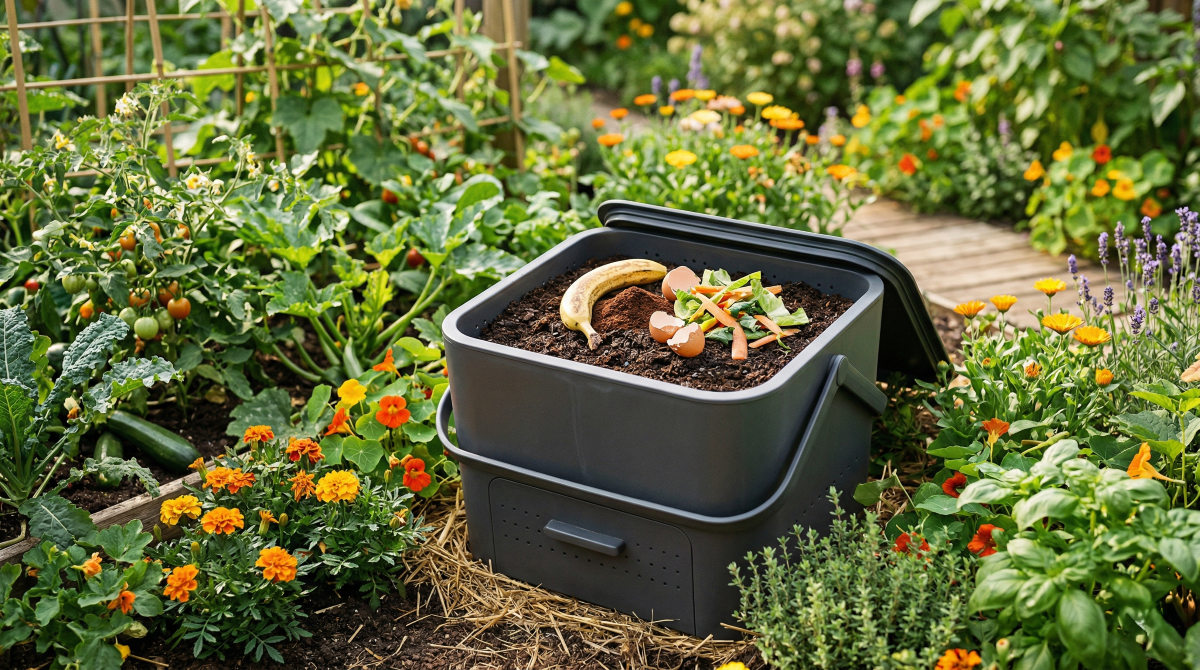
- Indoor Bins: Countertop bins (for collecting scraps), Bokashi bins (fermentation process, requires burying output).
- What to Compost (Greens & Browns):
- Greens (Nitrogen-rich): Vegetable and fruit scraps, coffee grounds, tea bags, grass clippings, fresh plant trimmings.
- Browns (Carbon-rich): Dry leaves, shredded newspaper/cardboard, wood chips, straw, sawdust.
- The Golden Rule: Aim for a 50/50 mix of greens and browns for optimal decomposition.
- What NOT to Compost:
- Meat, bones, dairy products, oils, greasy foods (attract pests, create odor, break down slowly).
- Diseased plants (can spread pathogens).
- Pet waste (contains harmful bacteria).
- Weeds with seeds (you’ll just spread them).
- Chemically treated wood or plants.
- Basic Maintenance:
- Moisture: Keep your pile consistently damp, like a wrung-out sponge. Add water if it’s too dry, or more browns if it’s too wet.
- Aeration: Turn your pile regularly (weekly or bi-weekly for active piles) to introduce oxygen. This speeds up decomposition and prevents odors.
Frequently Asked Questions (FAQs)
Q: Will my composting bin smell bad?
A: A well-managed composting bin should smell earthy, not foul. If you detect a rotten odor, your pile is likely too wet or lacks enough “brown” materials and oxygen. Turn it, add more dry leaves or shredded paper, and ensure proper moisture.
Q: Will it attract pests like rodents or insects?
A: Proper management prevents pests. Avoid composting meat, dairy, and oily foods. Keep your pile covered, and ensure a good “brown” layer on top to deter flies.
Q: How long does it take for compost to be ready?
A: This varies greatly depending on the method, materials, and management. An actively managed hot compost pile can be ready in a few weeks to 2-3 months. A passive pile might take 6-12 months.
Q: Can I compost citrus peels and onions?
A: Yes, in moderation. Large quantities of citrus can increase acidity, and onions can be slow to break down. Chop them into smaller pieces to speed up the process.
Q: What’s the difference between cold and hot composting?
A: Cold composting is a passive process where you simply pile materials and let them decompose slowly. Hot composting involves building a larger pile with the right carbon-to-nitrogen ratio, maintaining moisture, and turning it regularly to generate heat, speeding up decomposition significantly.
Conclusion
A composting bin isn’t just a container; it’s a gateway to a more sustainable, connected, and fruitful way of life. It takes our society’s discard pile – organic waste – and brilliantly transforms it into an invaluable resource, proving that there is no “waste” in nature, only ingredients for the next cycle. By choosing to compost, you make a tangible difference, one scrap at a time.
Final Thoughts
Beyond the tangible benefits of rich soil and reduced landfill waste, composting cultivates a powerful shift in perspective. You begin to see your “waste” not as an endpoint, but as a beginning. You appreciate the intricate processes of the natural world and realize your active role in stewarding them. So, start small, learn as you go, and prepare to be amazed. Your garden, your community, and the planet will thank you for taking that first step from waste to wonder.