Container Gardening for Beginners: How to Grow Vegetables in Pots
This guide contains affiliate links. As an Amazon Associate, Simple Garden Hub earns from qualifying purchases, at no extra cost to you.
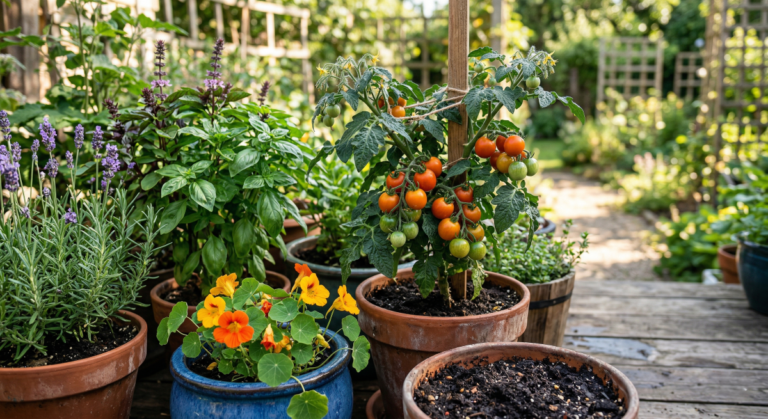
You do not need a yard to grow food. A balcony, a patio or a sunny doorstep is enough for tomatoes, salad greens, peppers and herbs, as long as you get three things right: the pot, the soil and the watering. This guide covers all three.
- Pot: bigger is better, and it must have drainage holes.
- Soil: bagged potting mix, never soil from the garden.
- Sun: 6 or more hours for fruiting crops; 3 to 4 for leafy greens and herbs.
- Water: when the top inch is dry, which is often daily in summer.
- Feed: every 2 to 4 weeks, because pots run out of nutrients.
Step 1: Find your sun
Watch your space for a day and count the hours of direct sun.
- 6 to 8 hours or more: you can grow anything, including tomatoes, peppers, cucumbers and squash.
- 4 to 6 hours: bush beans, peas, carrots, and most herbs.
- 3 to 4 hours: lettuce, spinach, kale, chard, parsley and mint.
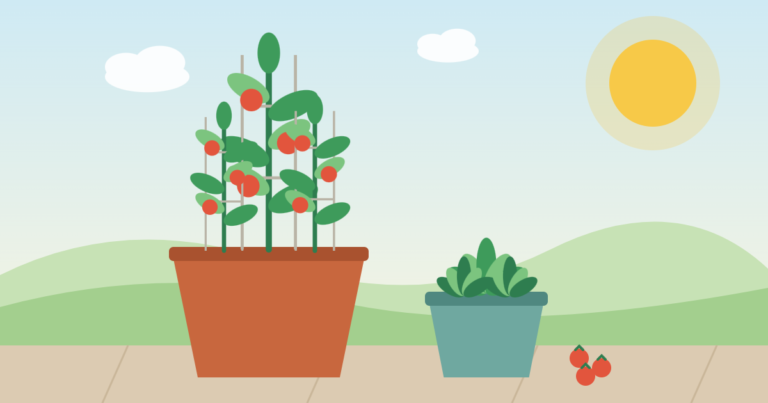
Pots have one big advantage here: you can move them to follow the sun.
Step 2: Choose your containers
Almost anything can be a planter if it holds soil and lets water out. Drainage holes are not optional. Without them, water pools at the bottom and roots rot.
| Material | Pros | Cons |
|---|---|---|
| Plastic or resin | Light, cheap, holds moisture well | Can fade and turn brittle; dark colors get hot |
| Terracotta | Classic look; breathes, so roots stay healthy | Dries out fast; heavy; can crack in frost |
| Fabric grow bags | Cheap, excellent drainage, fold flat for storage | Dry out quickly in hot weather |
| Glazed ceramic | Attractive; holds moisture | Heavy and expensive |
| Wood | Insulates roots; good for large planters | Rots over time |
| Self-watering planters | A built-in reservoir means fewer waterings | Cost more |
The cheapest way to get large pots, and almost impossible to overwater.
A water reservoir in the base keeps soil evenly moist, which is helpful in hot weather or if you travel.
What size pot do you need?
Small pots are the top reason container vegetables struggle. They dry out within hours and leave roots no room. When in doubt, go up a size.
Step 3: Use the right soil
Fill containers with bagged potting mix (sometimes sold as “container mix”). It is made to stay loose and drain well in a pot. Soil dug from the ground packs into a brick, drains poorly, and may bring weeds and disease with it.
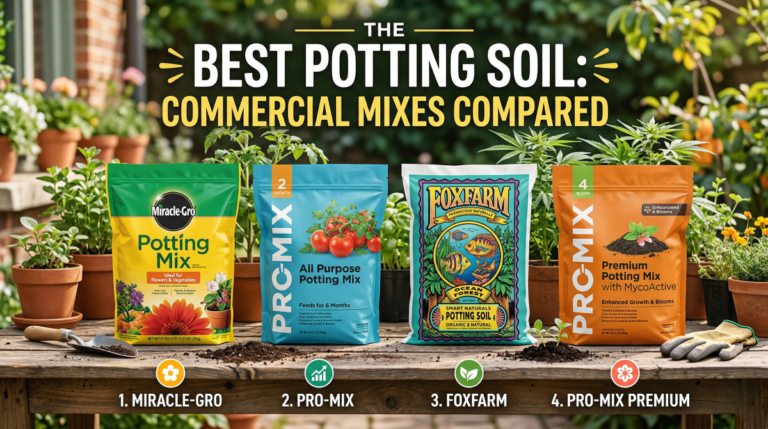
Our guide to choosing potting soil for containers explains the ingredients, and we have also compared four popular brands.
Skip the gravel. A layer of stones or broken pots in the bottom does not improve drainage. It actually leaves less room for roots and keeps the soil above it wetter. Fill the whole pot with potting mix.
Step 4: Pick easy crops
Look for varieties described as “patio”, “bush”, “dwarf” or “container”. They are bred to stay compact.
| Crop | Why it works in pots | Tip |
|---|---|---|
| Cherry tomatoes | Heavy crops from one plant | Use a 5-gallon pot or larger and add a cage on day one |
| Peppers | Naturally compact | They love the warmth of a pot in full sun |
| Lettuce and salad greens | Shallow roots, quick harvest | A wide, shallow bowl is ideal |
| Herbs | Small and productive | Give mint its own pot |
| Bush beans | No trellis needed | Sow 4 to 6 seeds in a 3-gallon pot |
| Radishes and green onions | Fast and tiny | Tuck them around larger plants |
For more ideas, see the 10 easiest vegetables to grow.
Step 5: Plant your container
- Put the pot where it will live. A large pot full of wet soil is very heavy.
- Moisten the potting mix in a bucket before you fill, so it soaks up water evenly.
- Fill to an inch or two below the rim. That gap holds water while it soaks in.
- Plant at the same depth the plant sat in its nursery pot. Tomatoes are the exception: bury them up to their lowest leaves.
- Water until it runs out of the bottom, then add any cage or stake now, before roots spread.
Watering a container garden
Pots dry out far faster than garden beds. In midsummer, expect to water once a day, and small pots in full sun may need it twice.
- Check first. Push a finger an inch into the soil. If it is dry, water.
- Water thoroughly, until it drains from the holes. A light sprinkle only wets the surface.
- Water in the morning so plants are ready for the heat of the day.
- Mulch the surface with an inch of straw or bark to slow evaporation.
For more detail, see how often to water a vegetable garden.
Feeding container plants
Every watering washes nutrients out of the pot, and the food in fresh potting mix lasts only a few weeks. Container plants depend on you for the rest.
- At planting: mix in a slow-release granular fertilizer.
- Through the season: feed with a liquid fertilizer every 2 to 4 weeks, following the label.
- For tomatoes and peppers: switch to a tomato fertilizer once flowers appear.
Mix it into the potting soil once and it feeds for months.
Common mistakes
- Pots that are too small. The single biggest cause of disappointing results.
- No drainage holes. Drill some, or use the pot as an outer cover for a plain one.
- Using garden soil. It compacts and suffocates roots.
- Too many plants per pot. One tomato per pot is enough.
- Forgetting to feed. Pale leaves and slow growth in midsummer usually mean hunger.
Frequently asked questions
Can I reuse potting soil next year?
Yes, if the plants in it were healthy. Remove old roots, then refresh it by mixing in about one-third new potting mix or compost and some fertilizer.
What vegetables grow well together in one pot?
A tomato with basil at its base is a classic. Lettuce, radishes and green onions also share a wide pot happily. See our companion planting chart.
Can I grow vegetables in pots indoors?
Herbs and salad greens, yes, with a bright window or a grow light. Fruiting crops need much stronger light.