How to Grow Tomatoes in Pots: A Beginner’s Guide
This guide contains affiliate links. As an Amazon Associate, Simple Garden Hub earns from qualifying purchases, at no extra cost to you.
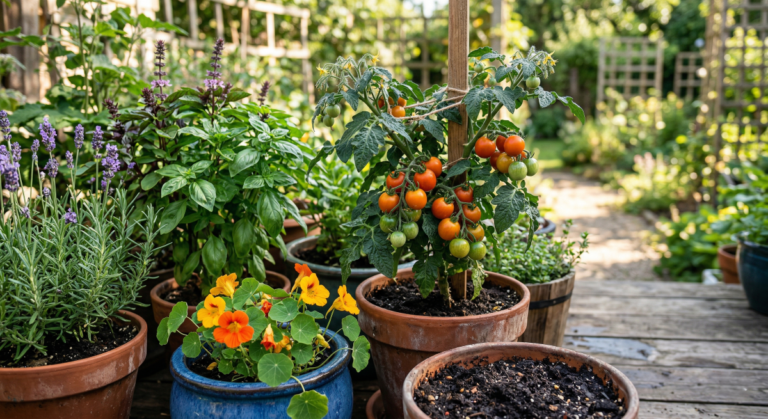
Tomatoes are the most popular vegetable to grow in pots, and for good reason: one healthy plant on a sunny patio can produce fruit for months. They are also the crop that punishes shortcuts. Give a tomato a big enough pot, steady water and regular food, and the rest is easy.
- Pot: at least 5 gallons for bush types, 10 gallons or more for vining types. One plant per pot.
- Sun: 6 to 8 hours of direct sun.
- Soil: fresh potting mix, never garden soil.
- Water: whenever the top inch is dry, which is often daily in summer.
- Feed: slow-release fertilizer at planting, then tomato feed once flowers appear.
Choose the right kind of tomato
Tomato plants come in two growth habits, and the difference matters a great deal in a pot.
| Determinate (“bush”) | Indeterminate (“vining”) | |
|---|---|---|
| Size | Stops at about 3 to 4 feet | Keeps growing, often past 6 feet |
| Harvest | Most fruit ripens over a few weeks | Fruit all season until frost |
| Pot size | 5 to 10 gallons | 10 to 20 gallons |
| Support | A sturdy cage | A tall, strong cage or stake |
| Best for | Beginners and small spaces | Gardeners with room and a big pot |
For a first try, pick a determinate or dwarf variety. Look for the words “patio”, “bush”, “dwarf” or “container” on the label. Varieties often recommended for pots include Bush Early Girl, Patio Choice Yellow, Roma, Tiny Tim and Tumbling Tom, which trails nicely from a hanging basket. Cherry tomatoes of any kind are the most forgiving.
Pick a big enough pot
This is the decision that matters most. A small pot dries out in hours on a hot day, and a tomato that swings between dry and soaked drops its flowers and produces damaged fruit.
- 5 gallons is the minimum. That is a pot about 12 inches wide and deep, or a standard bucket with holes drilled in the base.
- Bigger is easier. A 10 to 15 gallon pot holds more water, so it forgives a missed watering.
- Drainage holes are essential.
- Light colors stay cooler. Black pots in full sun can overheat roots in hot climates.
Cheap, roomy, and they drain so well that overwatering is almost impossible.
A reservoir in the base keeps moisture steady, which is exactly what tomatoes want.
How to plant a tomato in a pot
- Wait for warm weather. Plant outside after your last frost, once nights stay above 50°F. See when to plant vegetables.
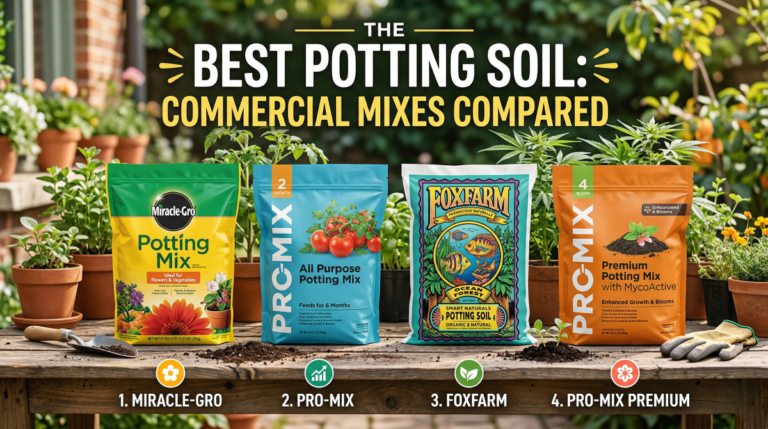
- Fill the pot with potting mix and stir in a slow-release fertilizer. Our guide to choosing potting soil explains what to buy.
- Plant deep. Pinch off the lowest leaves and bury the stem right up to the next set. Tomatoes grow roots all along a buried stem, which gives a sturdier plant.
- Add the cage or stake now. Pushing it in later damages roots.
- Water until it runs from the bottom, then spread an inch of straw or bark on top to slow evaporation.
A plant loaded with fruit is heavy. Thin wire cones bend, so buy sturdy ones.
Watering potted tomatoes
Uneven watering causes most problems with container tomatoes. Aim to keep the soil evenly moist, never bone dry and never waterlogged.
- Check every day. Push a finger an inch into the soil. If it is dry, water.
- Water deeply, until it drains from the holes.
- Water the soil, not the leaves. Wet foliage invites disease.
- Expect daily watering in summer, and twice a day for small pots in a heat wave.
More detail is in how often to water a vegetable garden.
Feeding
Frequent watering washes nutrients out of a pot, so container tomatoes need more feeding than those in the ground.
- At planting: slow-release granules mixed into the potting mix.
- Once flowers appear: a liquid tomato fertilizer every 1 to 2 weeks, following the label. Tomato fertilizers are higher in potassium, which supports fruit.
- Go easy on nitrogen. Too much gives you a huge leafy plant with few tomatoes.
Made for fruiting plants. Start once the first flowers open.
Pruning and support
- Bush (determinate) tomatoes: do not prune, apart from removing leaves that touch the soil. Pruning reduces the crop.
- Vining (indeterminate) tomatoes: you can pinch out some of the “suckers”, the shoots that sprout where a leaf meets the main stem, to keep the plant manageable. Tie the main stem to its support as it grows.
- All tomatoes: remove yellow or spotted leaves at the bottom to improve airflow.
Common problems
| What you see | Likely cause | What to do |
|---|---|---|
| Dark, sunken patch on the bottom of fruit | Blossom end rot, from uneven watering | Water consistently; mulch; use a bigger pot next time |
| Fruit cracking | Heavy watering after a dry spell | Keep moisture steady |
| Flowers dropping without setting fruit | Heat above about 90°F, or cold nights | Wait it out; keep watering; give afternoon shade in heat waves |
| Yellow lower leaves | Hunger, overwatering, or early disease | Feed, check drainage, remove affected leaves |
| Lots of leaves, few flowers | Too much nitrogen or too little sun | Switch to tomato feed; move to a sunnier spot |
Harvesting
Pick tomatoes when they are fully colored and give slightly when squeezed. Fruit that has started to change color will finish ripening indoors on a counter, which is useful at the end of the season when frost is forecast. Keep ripe tomatoes out of the refrigerator, as cold dulls their flavor.
Frequently asked questions
How many tomato plants can I put in one pot?
One. Two plants in the same pot compete for water and food, and both do worse.
Can I grow tomatoes in a 5-gallon bucket?
Yes, for bush and dwarf varieties. Drill several half-inch holes in the bottom first.
What can I plant in the same pot as a tomato?
Basil fits well around the base of a tomato in a large pot. See our companion planting chart.
Can I grow tomatoes indoors?
Dwarf varieties can fruit indoors under a strong grow light, but a sunny outdoor spot is far easier.