The Best Mulch for a Vegetable Garden (and How Deep to Spread It)
This guide contains affiliate links. As an Amazon Associate, Simple Garden Hub earns from qualifying purchases, at no extra cost to you.
Mulch is simply a layer of material spread over the soil. It is the closest thing gardening has to a shortcut: one afternoon of spreading saves weeks of weeding and watering. The right choice depends on what you are growing and what you can get cheaply.
- Best all-round mulch for vegetables: clean straw or shredded leaves.
- How deep: 2 to 4 inches for most materials.
- When: once the soil has warmed in late spring and seedlings are a few inches tall.
- Keep it an inch or two away from plant stems.
What mulch does for a vegetable garden
- Saves water. Shaded soil loses far less moisture to evaporation, so you water less often.
- Stops weeds. Most weed seeds need light to sprout. A thick layer blocks it.
- Evens out soil temperature. Roots stay cooler in summer and better protected in winter.
- Keeps plants clean and healthier. Mulch stops rain splashing soil, and the disease spores in it, onto lower leaves.
- Feeds the soil. Organic mulches break down into humus, improving the soil a little every year.
The best mulches for vegetables, compared
| Mulch | Best for | Pros | Watch out for |
|---|---|---|---|
| Straw | Almost every vegetable | Light, easy to spread, lasts a season | Buy straw, not hay. Hay is full of seeds |
| Shredded leaves | All beds; winter cover | Free, and excellent for soil life | Whole leaves mat together. Shred them first |
| Grass clippings | Heavy feeders such as corn and squash | Free, adds nitrogen | Use thin, dry layers, and only from untreated lawns |
| Compost | Every bed, especially seedlings | Feeds as well as covers | Weeds can sprout in it; thinner weed barrier |
| Wood chips or bark | Paths, fruit bushes, perennials | Long-lasting and tidy | Keep on the surface; awkward where you sow seeds every year |
| Pine needles | Paths, berries, garlic | Light, slow to break down, do not mat | Not always easy to find |
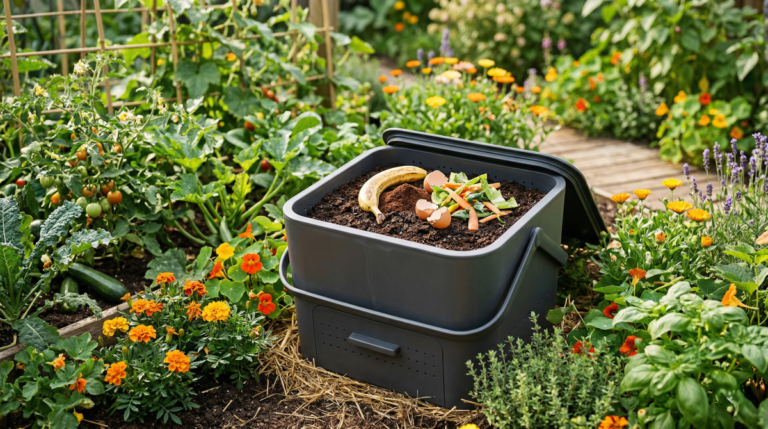
If you make your own compost, you already have a supply. See how to compost at home.
Chopped, seed-free straw in a compressed bale is the easiest mulch for vegetable beds.
How deep to spread mulch
Too thin and weeds push through. Too thick and water and air struggle to reach the soil. Light, airy materials such as straw settle a good deal, so spread them generously. Dense materials such as grass clippings should go on in thin layers, left to dry before you add more, or they turn into a slimy, smelly mat.
When to mulch
- Late spring: wait until the soil has warmed and seedlings are 3 to 4 inches tall. Mulching cold, wet spring soil keeps it cold and slows warm-season crops such as tomatoes and peppers.
- Summer: top up as the layer thins.
- Fall: cover empty beds with shredded leaves or straw for winter. See how to prepare your garden for winter.
How to apply mulch, step by step
- Weed first. Mulch prevents new weeds, but established ones grow straight through it.
- Water the bed well. Mulch holds in the moisture that is already there.
- Spread the mulch evenly to the right depth for the material.
- Pull it back from stems. Leave a gap of an inch or two around each plant. Mulch piled against stems holds moisture there and causes rot.
- Top up through the season as it breaks down.
Sowing seeds? Do not mulch over a freshly sown row, as small seedlings cannot push through. Mulch the paths and spaces between rows, then close in around the seedlings once they are a few inches tall.
The cardboard trick for weedy beds
For a weedy area, lay plain cardboard or several sheets of newspaper on the soil, overlap the edges, wet it thoroughly, and cover with 3 to 4 inches of mulch. The paper smothers the weeds and rots away within a season. Remove tape and labels first, and avoid glossy, coated card.
Mulches to use with care
- Hay. It contains grass and weed seeds, which you will be pulling for years.
- Grass clippings from treated lawns. Weedkillers can carry over on clippings and damage vegetables. Use clippings only from lawns that have not been sprayed.
- Hay, straw or manure of unknown origin. Some weedkillers used on pasture and grain fields persist for a long time and can harm tomatoes, beans and peas. Ask the seller whether the field was sprayed.
- Fresh wood chips dug into the soil. Left on the surface they are fine. Mixed in, they use up nitrogen as they rot.
- Black plastic and landscape fabric. Plastic warms soil and can help melons and peppers in cool climates, but it blocks rain, does nothing for the soil, and has to be thrown away. Fabric tangles with roots and weeds over time.
A common myth: pine needles do not make your soil noticeably acidic. By the time they have fallen and dried, their effect on soil pH is negligible. Use them freely.
Common mulching mistakes
- Piling mulch against stems. It invites rot and gives slugs somewhere to hide.
- Mulching too early in spring, which keeps the soil cold.
- Laying it too thin. An inch of straw will not stop weeds.
- Thick, wet grass clippings. They turn slimy. Dry them first and use thin layers.
- Ignoring slugs. In damp climates, mulch shelters slugs. If they become a problem, thin the mulch near seedlings.
Turns bags of autumn leaves into fine mulch that will not mat. A mower with a bag does the same job.
A tidy alternative to cardboard under straw. It breaks down into the soil by the end of the season.
Frequently asked questions
What is the best mulch for tomatoes?
Straw or shredded leaves, 2 to 3 inches deep, applied once the soil is warm. Mulch helps prevent the uneven moisture behind blossom end rot. See how to grow tomatoes in pots.
Should I remove old mulch each year?
No. Organic mulch breaks down into the soil. Add a fresh layer on top. If it has formed a thick mat, loosen it with a fork first.
Can I use wood chips in a vegetable garden?
Yes, on the surface. They are ideal for paths and around long-lived plants. In beds where you sow seeds each year, straw or leaves are easier to move aside.
Does mulch attract pests?
It can shelter slugs and earwigs in wet conditions. It also shelters ground beetles and spiders, which eat pests. For most gardens the benefits far outweigh the drawbacks.